

1. What we built / goals / users / problems solved :
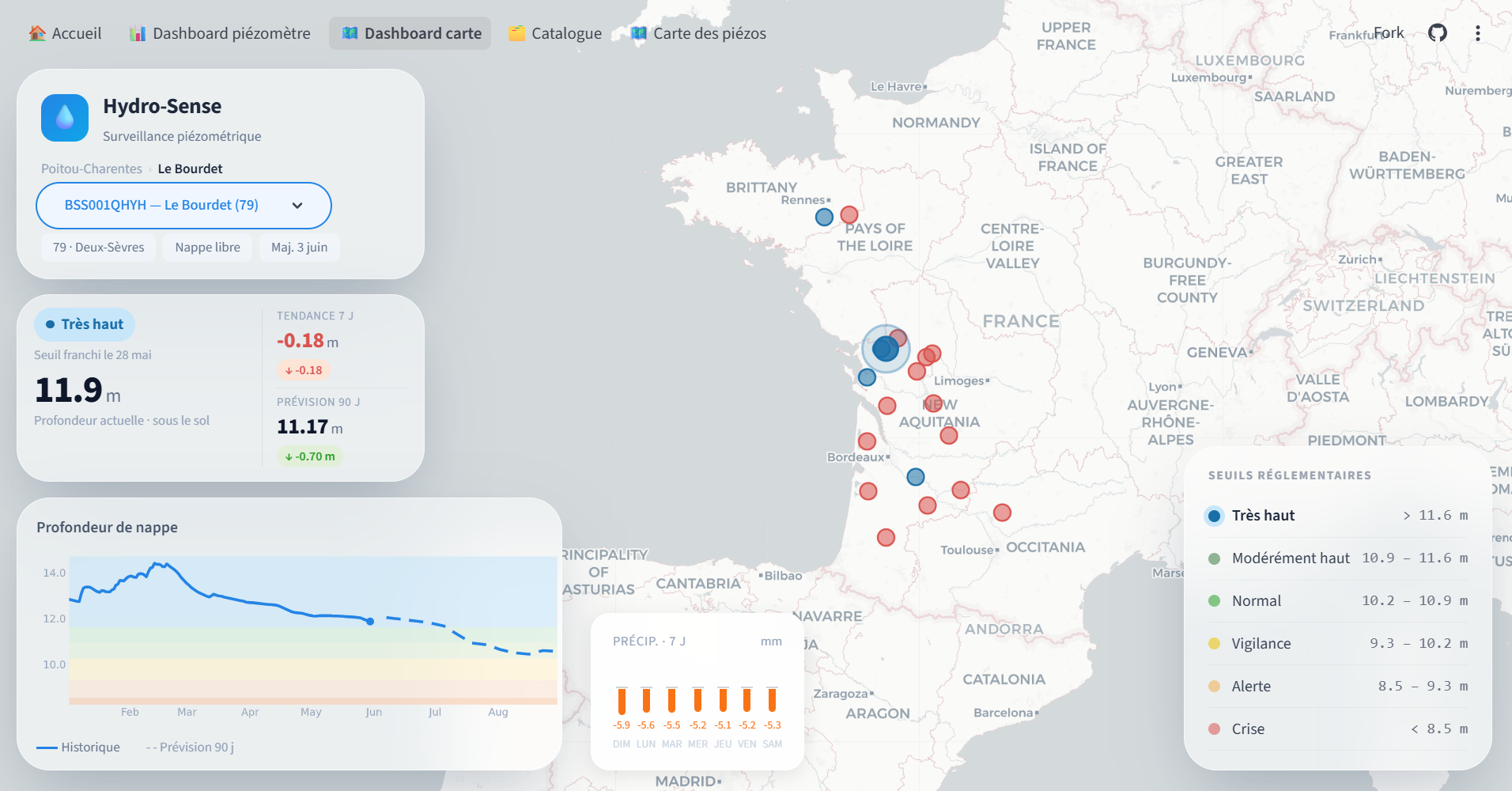
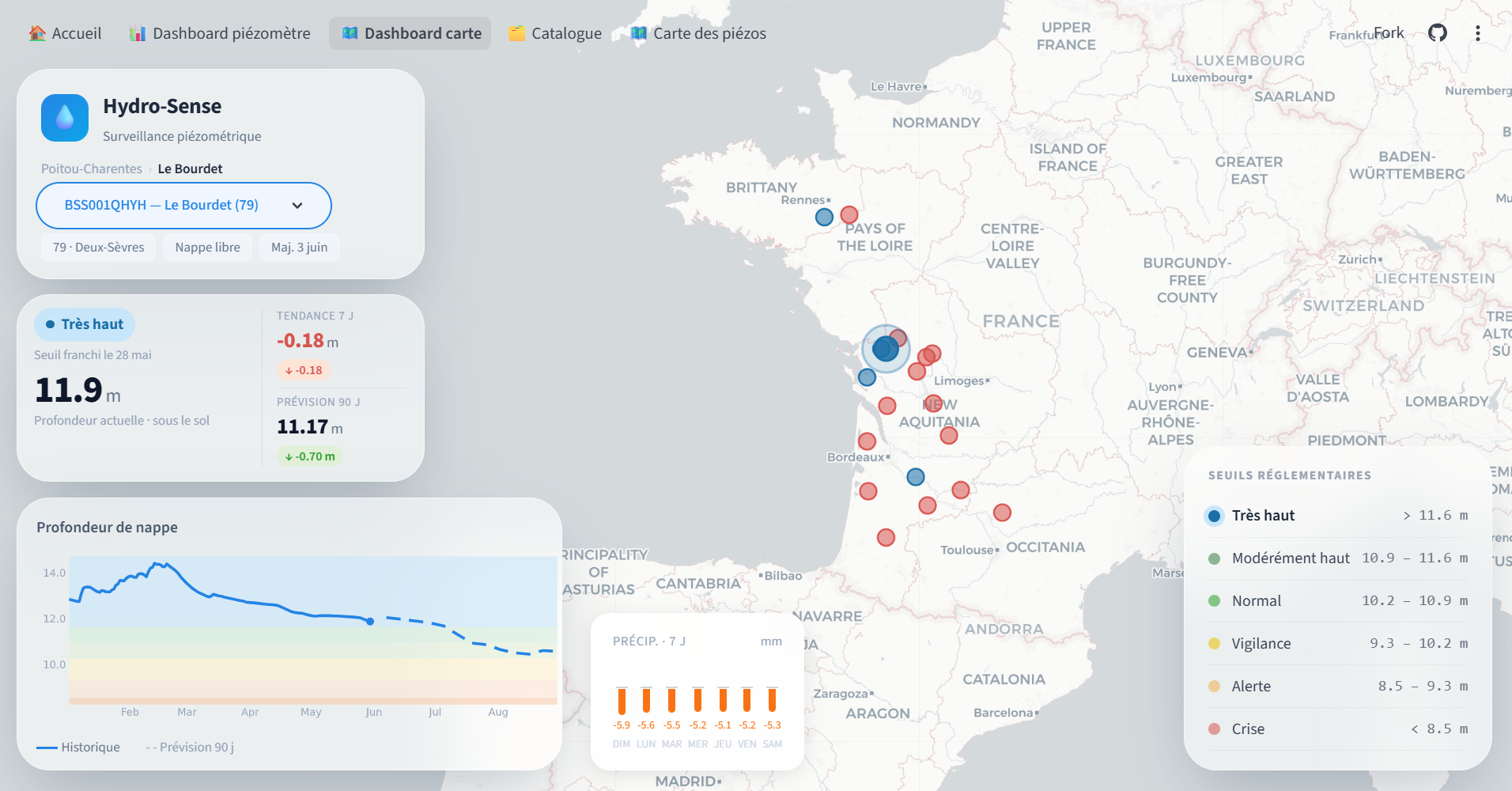
Hydro-Sense is a groundwater forecasting tool for Poitou-Charentes, a region where agriculture and ecological preservation (Marais poitevin) create recurring water-stress conflicts. BRGM's existing models (Gardénia, Tempo) are reliable but too heavy for lightweight local forecasting. Hydro-Sense predicts groundwater levels 90 days ahead and anticipates crossings of drought alert thresholds (Vigilance / Alerte / Alerte Renforcée / Crise). Target users: water resource managers, local authorities, and agricultural stakeholders needing early warnings to anticipate restrictions.
2. How we built it :
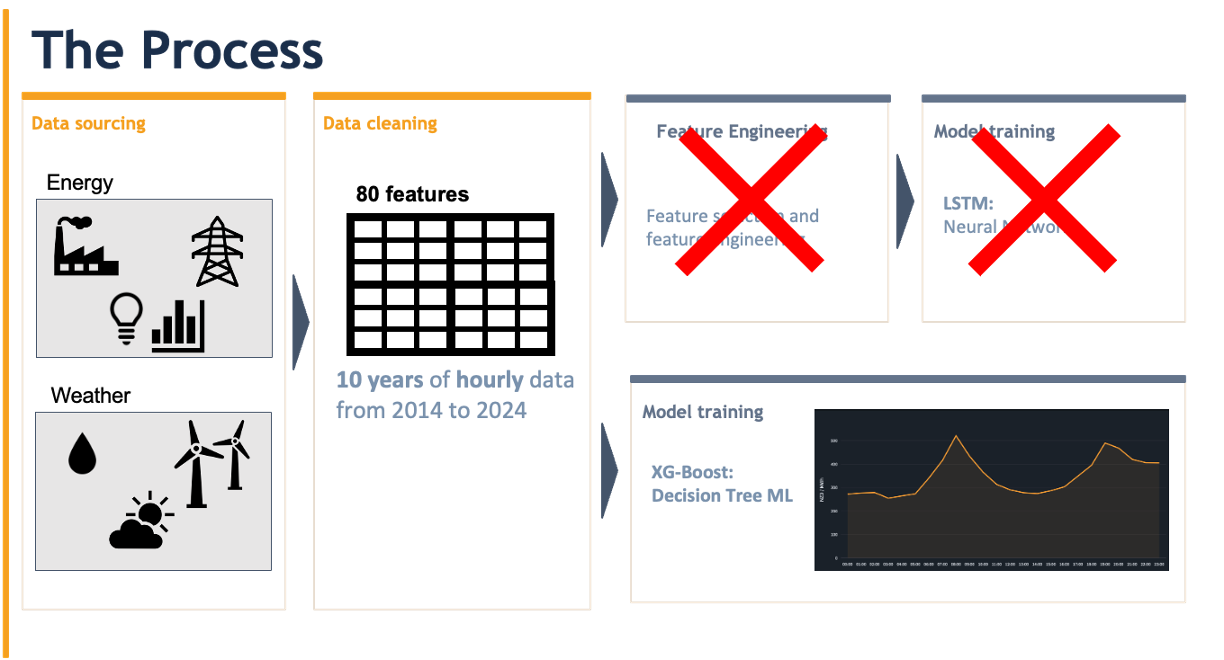
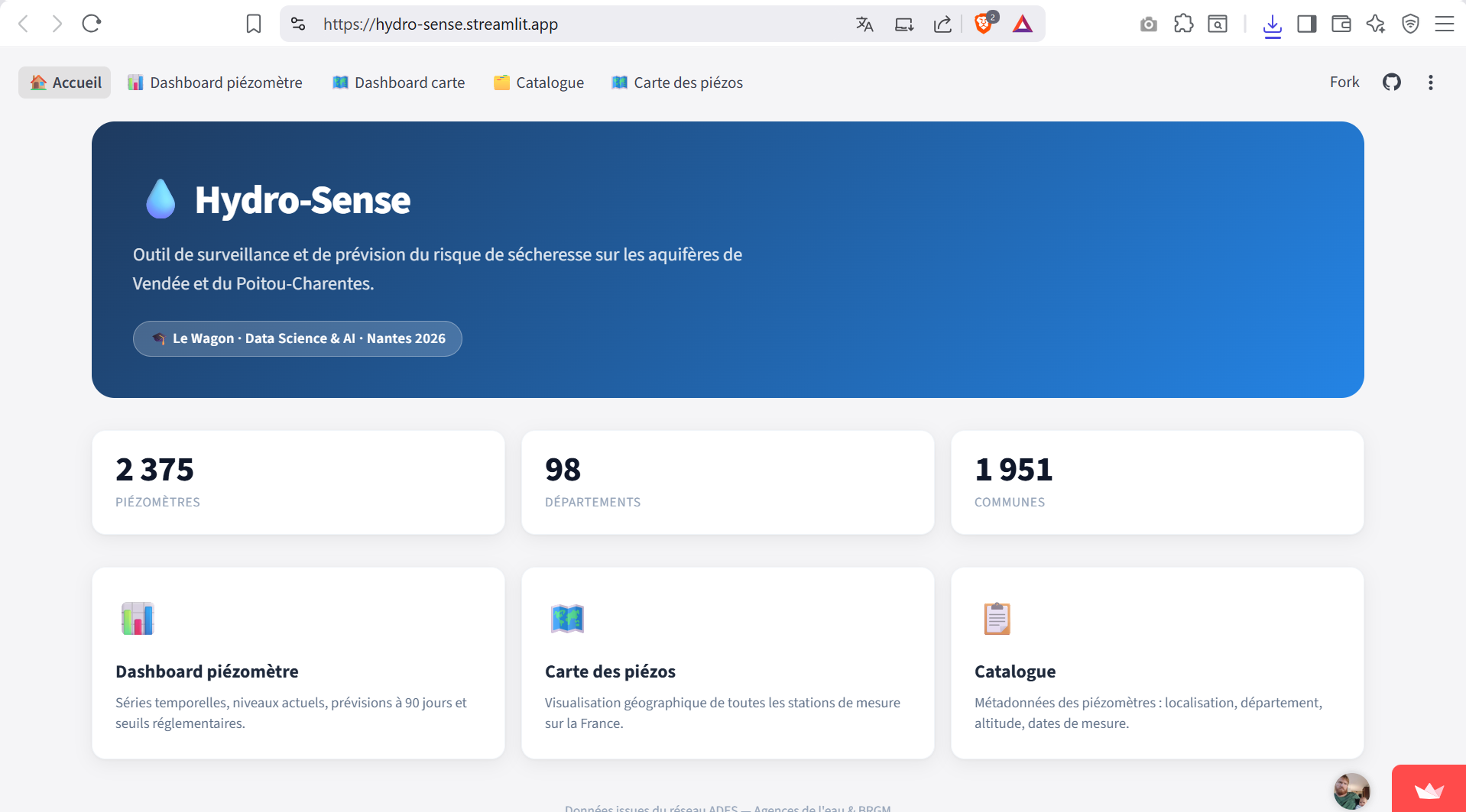
We sourced piezometric and rainfall data via the Hubeau and Météo-France APIs, stored in Google BigQuery. We built a full ML pipeline (custom hydrosense Python package) covering data cleaning, weekly feature engineering (temporal lags, seasonal encoding, rolling averages), model training, and autoregressive 13-week forecasting. We benchmarked SARIMA/SARIMAX, Random Forest, XGBoost, Prophet, and LSTM against a naive seasonal baseline, then exposed predictions via a FastAPI backend. The stack is containerized with Docker, deployed on Google Cloud Run, with CI/CD via GitHub Actions. The frontend is a Streamlit dashboard with an interactive Folium map, historical curves with forecast overlays, and color-coded threshold indicators.
3. Next steps :
Integrate MLflow for model registry/versioning (deferred post-demo)
Persist the trained model instead of retraining on every API call
Extend coverage to more stations across the region
Add covariates (evapotranspiration, BDLISA geology) to improve 90-day accuracy


No image found.
Demo day video
Tech stack
No items found.
Meet the team


Maxime Richard

Romain Huchet
Yann Simon
See similar projects